
37-in-1 Sensor Kit compatible with Arduino
8.50 د.ك
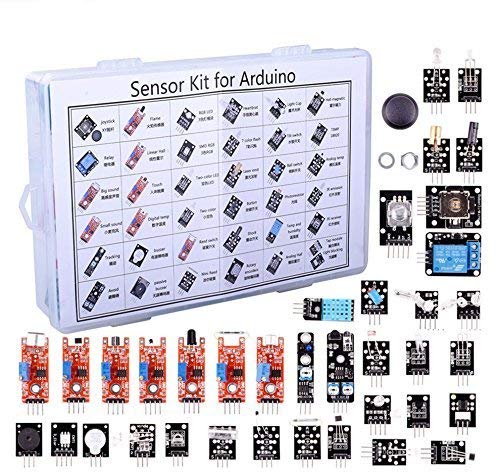
The 37 in 1 Sensor Kit Compatible with Arduino is a complete learning and prototyping kit designed for Arduino projects, robotics, STEM education, IoT systems, and DIY electronics development. Additionally, this sensor kit includes multiple popular modules and sensors for hands-on electronics experimentation and programming.
In stock
Description
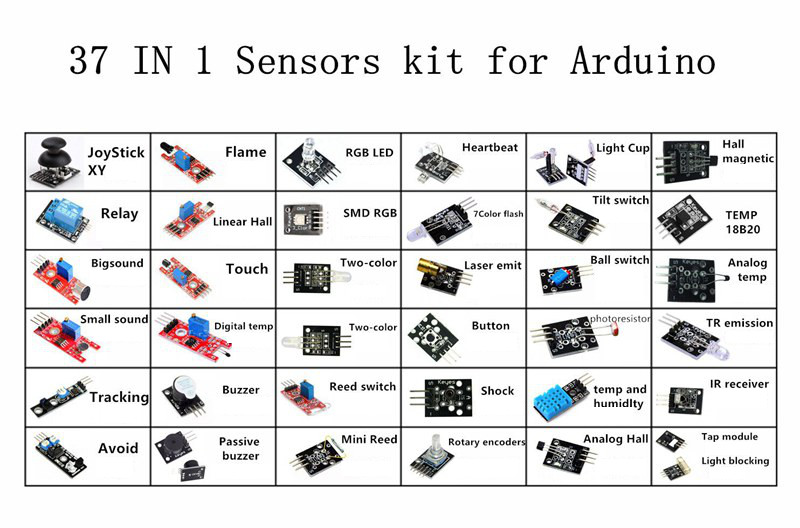
- Joystick x 1
- Relay module x 1
- Big sound sensor module x 1
- Small sound sensor module x 1
- Tracking sensor module x 1
- Avoidance sensor module x 1
- Flame sensor module x 1
- Linear hall sensor module x 1
- Touch sensor module x 1
- Digital temperature sensor module x 1
- Passive buzzer x 1
- Active buzzer x 1
- RGB LED module x 1
- SMD RGB LED module x 1
- Two-color module x 1
- Mini two-color module x 1
- Reed switch x 1
- Mini switch x 1
- Heartbeat module x 1
- 7 color flash module x 1
- Laser emit x 1
- Button x 1
- Shock sensor module x 1
- Rotay encoder x 1
- 2 pcs light cup x 1
- Tilt switch x 1
- Ball switch x 1
- Photoresistor x 1
- Temp and humidity module x 1
- Analog hall x 1
- Hall magnetic x 1
- 18B20 temp
- Analog temp x 1
- IR emission x 1
- IR receiver x 1
- Tap module x 1
- Light blocking x 1
The 37 in 1 Sensor Kit Compatible with Arduino is a comprehensive electronics kit designed for beginners, students, makers, robotics developers, and embedded systems enthusiasts. Because the kit contains a wide range of sensors and electronic modules, it provides an excellent platform for learning Arduino programming, sensor interfacing, and automation system development.
Additionally, this sensor kit helps users explore practical electronics applications including robotics, smart automation, environmental monitoring, IoT systems, and STEM education projects. Therefore, it is widely used in schools, universities, electronics labs, and DIY maker environments.
Moreover, the included modules work perfectly with the Arduino UNO R3 for rapid prototyping and sensor experimentation.
What is the 37 in 1 Sensor Kit?
The 37 in 1 Sensor Kit is a collection of commonly used Arduino-compatible sensors and electronic modules designed for electronics learning and project development. Moreover, the kit allows users to experiment with different input, output, detection, and control technologies using real hardware.
Because the kit contains multiple sensor types, users can learn about temperature sensing, sound detection, motion sensing, magnetic fields, light measurement, obstacle detection, and wireless electronics systems.
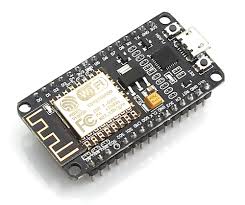
At the same time, the sensor kit supports smart automation and IoT applications using the ESP8266 WiFi Wireless Module for internet connectivity and remote monitoring projects.
Key Features
- 37 in 1 Arduino sensor kit
- Wide variety of sensors and modules
- Compatible with Arduino boards
- Excellent for beginners and students
- Supports robotics and automation
- Ideal for STEM education
- Suitable for IoT projects
- Hands-on electronics learning
- Easy sensor interfacing
- Supports embedded systems development
- Perfect for DIY electronics
- Rapid prototyping solution
Technical Specifications
- Product Type: Sensor Kit
- Number of Modules: 37
- Compatibility: Arduino compatible
- Includes sensor and module assortment
- Suitable for educational electronics
- Supports digital and analog interfaces
- Compact modular design
- Application: Learning and prototyping
Applications
The 37 in 1 Sensor Kit is suitable for many electronics and embedded systems applications. Furthermore, the variety of included modules allows users to build multiple practical projects.
Common applications include:
- Arduino learning projects
- Robotics development
- Smart automation systems
- Environmental monitoring
- IoT applications
- STEM education
- DIY electronics projects
- Sensor interfacing experiments
- Home automation systems
- Embedded systems development
- Interactive electronics projects
- Wireless monitoring systems using the ESP32 Development Board
Why Choose This Sensor Kit?
This 37 in 1 Sensor Kit provides a complete learning environment for electronics programming and hardware experimentation. Additionally, the kit allows users to explore multiple sensor technologies without purchasing modules individually.
Moreover, the modules are easy to connect and highly compatible with Arduino systems and breadboards. Because of this, students and developers can quickly build and test electronics projects while learning embedded programming concepts.
Overall, this kit is an excellent choice for students, makers, teachers, robotics engineers, and IoT developers working with the Breadboard MB-102 and embedded electronics systems.
Compatibility
The 37 in 1 Sensor Kit is compatible with:
- Arduino UNO
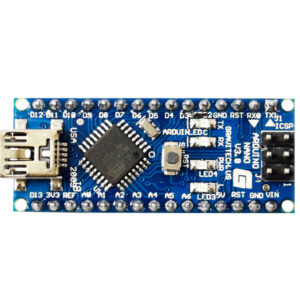
- Arduino Nano
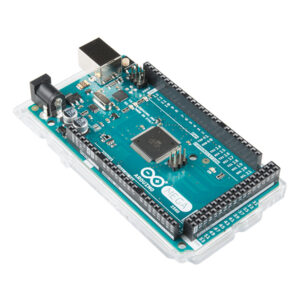
- Arduino Mega
- ESP32 boards
- ESP8266 modules
- Raspberry Pi systems
- Embedded systems
- Robotics platforms
- Smart automation projects
- DIY electronics applications
Additionally, the kit works perfectly with accessories such as the Jumper Wires Kit and USB programming cables.
Tutorial Section
Getting started with the 37 in 1 Sensor Kit is simple and beginner-friendly. First, connect the selected sensor module to your Arduino board using jumper wires. After that, upload the appropriate sample code to begin testing and experimenting.
For example, you can use this kit to:
- Detect motion and obstacles
- Measure temperature and light
- Build smart automation systems
- Create robotics projects
- Learn Arduino programming
- Develop IoT monitoring applications
Additionally, the kit can be combined with the OLED SSD1306 Display Module for real-time sensor data display applications.
Conclusion
The 37 in 1 Sensor Kit Compatible with Arduino is a complete electronics learning and prototyping solution for robotics, STEM education, IoT systems, and DIY electronics projects. Because it includes a wide range of sensors and modules, it provides excellent value for beginners and advanced developers alike.
Furthermore, its broad compatibility, educational flexibility, and hands-on learning capabilities make it an ideal choice for students, makers, teachers, engineers, and embedded systems developers.