MyoWare 2.0 Muscle Sensor Kit
24.75 د.ك
The MyoWare Muscle Sensor is an EMG sensor module designed for Arduino projects, robotics systems, wearable electronics, and biomedical signal detection applications. It measures muscle activity and converts EMG signals into easy-to-read analog output data.
In stock
Description
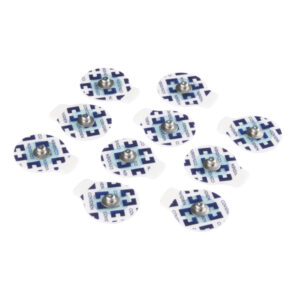
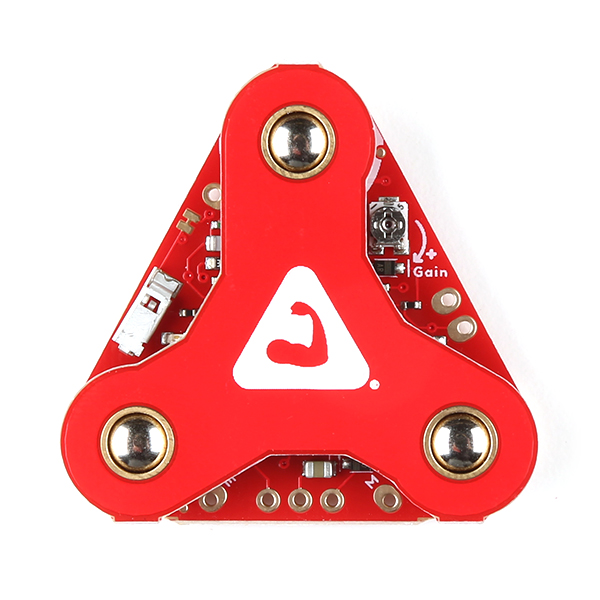
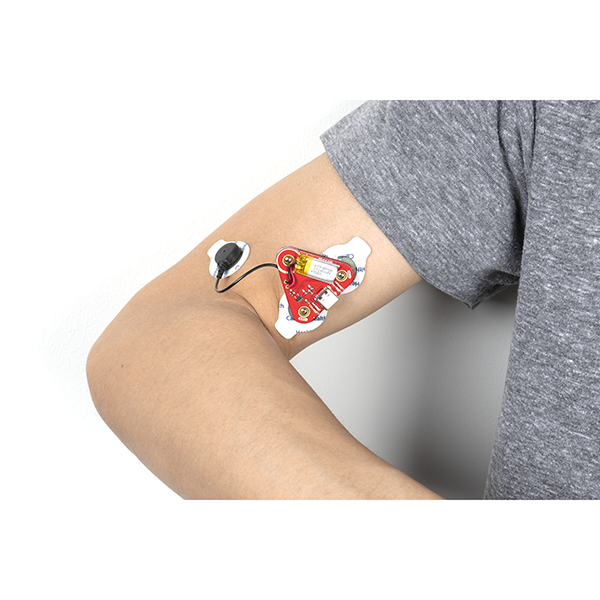
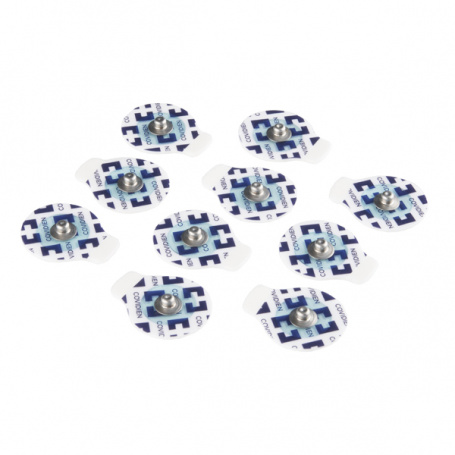
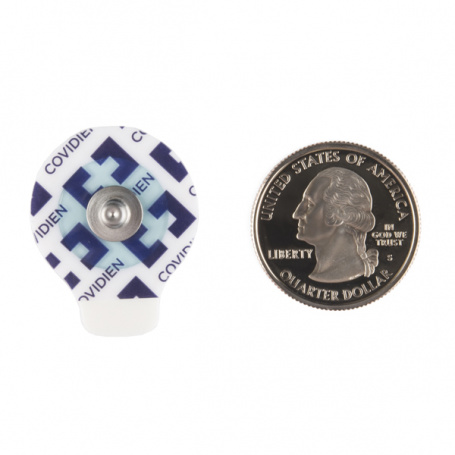
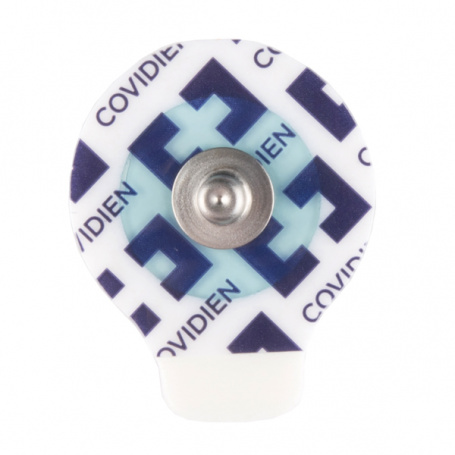
Using our muscles to control things is the way that most of us are accustomed to doing it. We push buttons, pull levers, move joysticks… but what if we could take the buttons, levers and joysticks out of the equation and control it with our muscles? The MyoWare® 2.0 Muscle Sensor is an Arduino-compatible, all-in-one electromyography (EMG) sensor from Advancer Technologies that allows you to do just that! The MyoWare 2.0 Muscle Sensor has been redesigned from the ground up with a new easy-to-use, compact design and upgraded with the latest and greatest chipset improving sensor performance and reliability. The innovative snap connector system eliminates the need to solder connections for the MyoWare 2.0 ecosystem. It’s that easy: stick on a few electrodes (not included), read the output voltage and flex some muscles!
The MyoWare 2.0 Muscle Sensor measures muscle activity through the electric potential of the muscle, commonly referred to as surface electromyography (EMG or sEMG for short). When your brain tells your muscle to flex, it sends an electrical signal to your muscle to start recruiting motor units (the bundles of muscle fibers that generate the force behind your muscles).
The harder you flex, the more motor units are recruited to generate great muscle force. The greater the number of motor units, the more the electrical activity of your muscle increases. MyoWare 2.0 Muscle Sensor will analyze the filtered and rectified electrical activity of a muscle and output a signal (0-VIN volts, where VIN signifies the voltage of the power source) that represents how hard the muscle is being flexed.
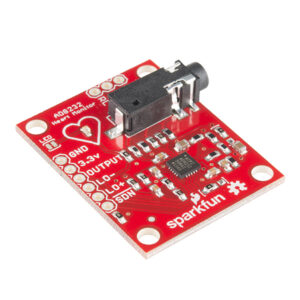
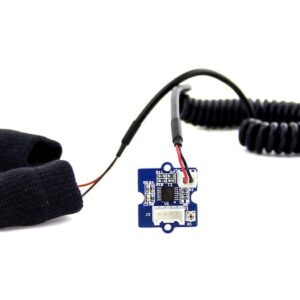
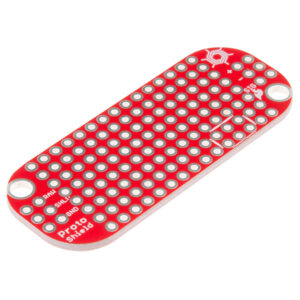
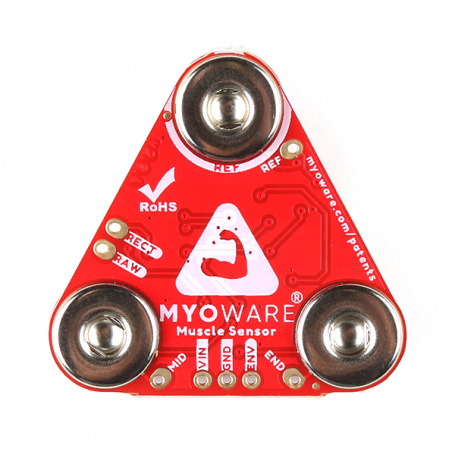
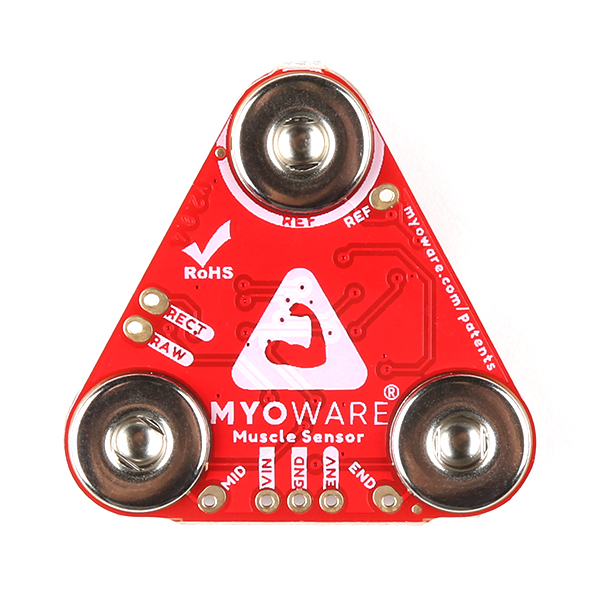
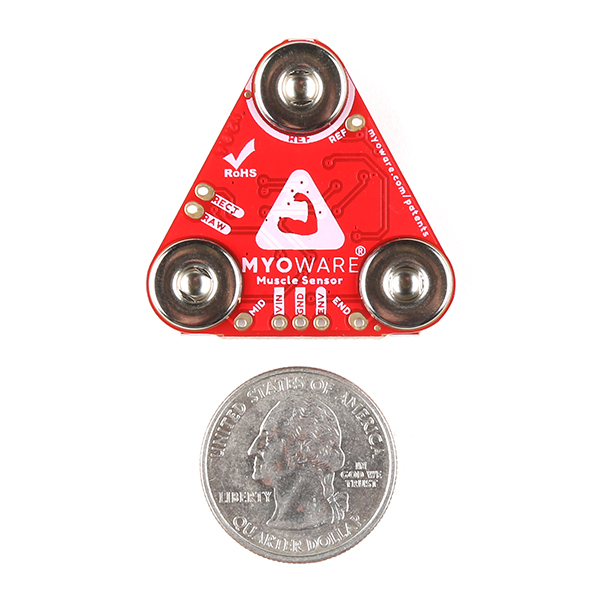
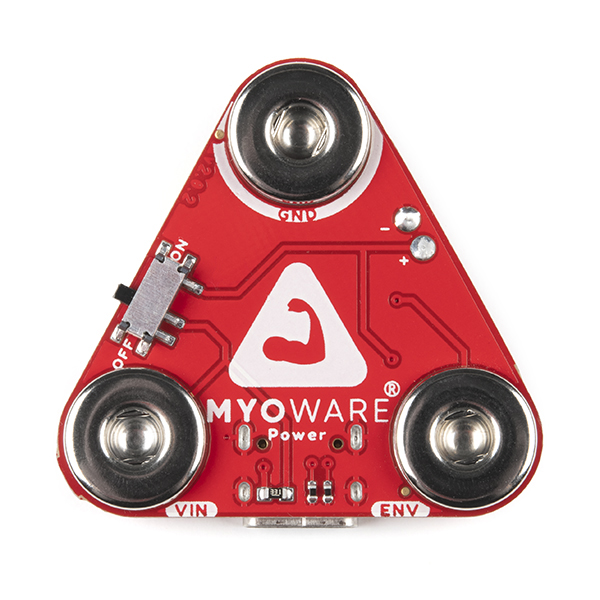
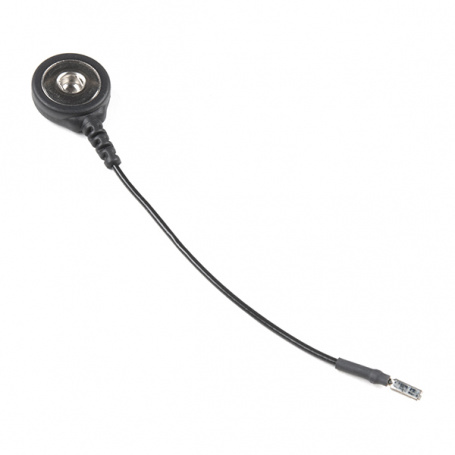
The MyoWare 2.0 Muscle Sensor builds upon its previous wearable design that allows you to attach biomedical sensor pads directly to the board itself, getting rid of those pesky cables. This board includes a single-supply voltage of +3.3V to +5V, three output modes, reverse polarity protected power pins, and indicator LEDs. Additionally, we have developed a few shields (such as the Cable, Power, and LED shields to name a few) that can attach to the MyoWare 2.0 Muscle Sensor to help increase its versatility and functionality! The muscle sensor’s snap connector system makes it easier to stack shields together. The top side connectors link to power and the sensor’s EMG envelope output while the bottom side links to the input electrodes.
Measuring muscle activity by detecting its electric potential has traditionally been used for medical research. However, with the advent of ever shrinking yet more powerful microcontrollers and integrated circuits, EMG circuits and sensors have found their way into all kinds of control systems such as video games, robotics, and prosthetics! Biomedical sensor pads can be found in the Recommended Products section below to be purchased separately.
Note: MyoWare and the Muscle Sensor are not intended for use in the diagnosis of disease or other conditions, or in the cure, mitigation treatment, or prevention of disease, in a man or other animals.
- Wearable Design
- Supply Voltage
- Minimum: +2.27V
- Typically: +3.3V to +5V
- Maximum: +5.47V
- Input Bias Current
- 250pA, max 1nA
- Reverse Polarity Protection
- Three Output Modes
- Raw EMG
- Rectified
- Envelope
- Expandable via Shields
- MyoWare® 2.0 Muscle Sensor Form Factor
- 3x Female Snap Pins (Power and EMG Envelope Output)
- 3x Male Snap Pins (Input Electrodes)
- LED Indicators
- VIN
- ENV
- Reference Electrode Jumper
- Specially Designed For Microcontrollers
- Adjustable Gain
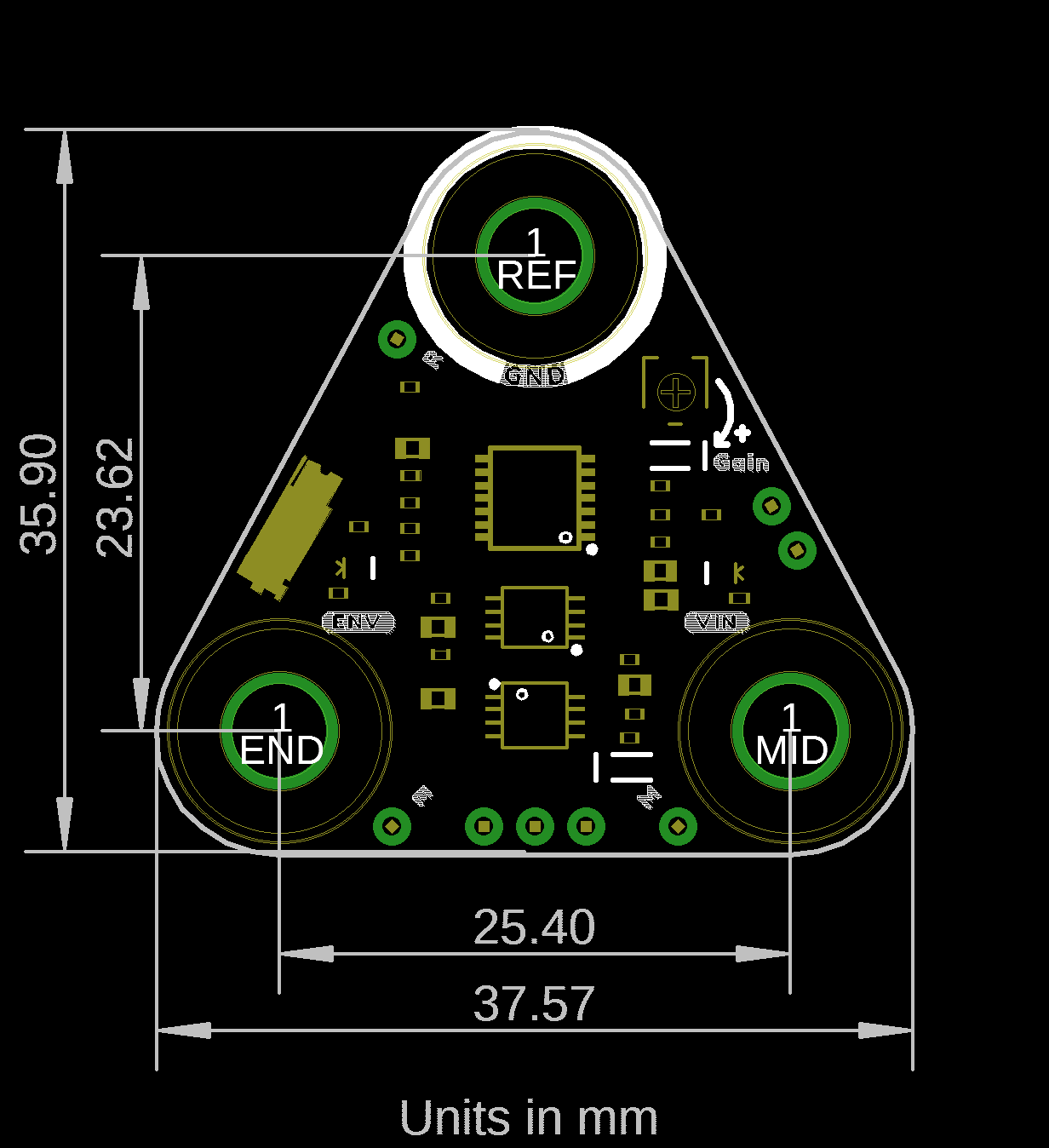
- Board Dimensions
- 37.57mm x 35.90mm (1.48” x 1.41”)
- Board Dimensions
- Hookup Guide
- Advancer Technologies: MyoWare® 2.0
- Quickstart Guide (4.37MB)
- Advanced Guide (9.00MB)
- Patents [1]
- Arduino Reference Language: ArduinoBLE Library
- GitHub Example Repo
- MyoWare 2.0 Ecosystem Page
Introduction
The MyoWare Muscle Sensor is a compact EMG sensing module designed for Arduino projects, robotics systems, wearable electronics, and biomedical electronics applications. This sensor detects electrical activity generated by muscles and converts it into analog signals for microcontroller processing.
Because muscle sensing is important in motion-control and biomedical systems, the sensor helps developers create gesture-controlled devices, robotics projects, and wearable electronics applications. In addition, the compact design allows easy installation into embedded systems and prototype circuits.
Many students, makers, and engineers use this sensor for human-machine interaction and smart control systems. You can also combine it with the <a href=”/product/arduino-uno-r3/”>Arduino UNO R3</a> for rapid prototyping and EMG signal monitoring.
Understanding This EMG Sensor
This EMG sensor measures electrical signals produced by muscle activity. When muscles contract or move, the sensor detects tiny electrical changes and converts them into readable analog output signals.
The module is commonly used in robotics, wearable electronics, and biomedical projects because it allows systems to respond to muscle movement. Furthermore, the sensor simplifies EMG signal acquisition for students and developers working on motion-control applications.
As a result, users can create interactive systems that respond to real muscle activity and gestures.
Main Features
- EMG muscle sensing module
- Detects muscle activity signals
- Analog signal output
- Compact and lightweight design
- Suitable for Arduino projects
- Ideal for robotics systems
- Useful for wearable electronics
- Supports biomedical applications
- Easy microcontroller interfacing
- Beginner-friendly module
- Compatible with embedded electronics
- Suitable for gesture-control projects
Technical Specifications
- Product Type: EMG muscle sensor
- Function: Muscle activity detection
- Output Type: Analog signal
- Compact sensor module
- Lightweight PCB design
- Easy analog interfacing
- Suitable for embedded systems
- Designed for biomedical electronics
- Suitable for motion sensing applications
Common Applications
This muscle sensing module supports many robotics and biomedical electronics applications. For example, developers use it in gesture-control systems, wearable electronics, and interactive robotics projects.
Common applications include:
- EMG signal monitoring
- Gesture-control systems
- Robotics movement control
- Wearable electronics
- Arduino biomedical projects
- Motion detection systems
- Human-machine interaction
- Embedded electronics projects
- STEM education projects
- Smart automation systems
- DIY electronics experiments
- Biomedical sensing applications
In addition, many users combine the sensor with the <a href=”/product/oled-0-96-inch-lcd-display-module-i2c-iic-spi-serial/”>OLED Display Module</a> for live EMG signal visualization.
Why Choose This Muscle Sensor?
This muscle sensor provides an easy way to detect muscle movement and electrical activity in electronics systems. The compact design also makes installation simple in wearable devices and robotics projects.
Users can create responsive control systems without complicated biomedical hardware. Therefore, the sensor is useful for students, makers, robotics developers, and embedded electronics engineers.
Another advantage is its compatibility with many development boards and analog input systems. Because of this, it works well in educational electronics, biomedical research, and smart automation projects.
Compatibility
Compatible with:
- Arduino UNO
- Arduino Nano
- ESP32 Development Board
- Raspberry Pi
- Embedded electronics systems
- Robotics platforms
- Wearable electronics
- Automation systems
- DIY electronics projects
- Educational electronics kits
The sensor can also be combined with the <a href=”/product/jumper-wires/”>Jumper Wires Kit</a> and <a href=”/product/breadboard-test-circuit-mb-102/”>Breadboard MB-102</a> for rapid prototyping and testing.
Tutorial Section
Getting started is simple and beginner-friendly. First, connect the muscle sensor to your microcontroller using the analog output pins. After that, attach the sensor electrodes to the target muscle area and upload code to monitor muscle activity signals.
For example, you can use this sensor to:
- Build gesture-control systems
- Detect muscle movement
- Create wearable robotics projects
- Monitor EMG signals
- Develop interactive electronics
- Build smart automation systems
You can also combine the sensor with the <a href=”/product/oled-0-96-inch-lcd-display-module-i2c-iic-spi-serial/”>OLED Display Module</a> for real-time muscle signal visualization.
Conclusion
The MyoWare Muscle Sensor is a reliable EMG sensing solution for Arduino projects, robotics systems, wearable electronics, and biomedical applications. It provides accurate muscle activity detection in a compact and easy-to-use design suitable for many electronics projects.
In addition, its simple interfacing, lightweight structure, and broad compatibility make it a practical choice for students, makers, engineers, and smart electronics developers.